


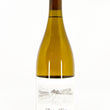
Phelan Farm - Savagnin, Chardonnay - Cambria, San Luis Obispo County, CA - 2021
Regular price
$109.80
Sale price
$122.00
Unit price per
Notes from the Winery/Importer
This is a wine that stopped me in my tracks. I stopped dead in the middle of tasting and just considered that the liquid in my mouth was amongst the most delicious things I had ever tasted. Raj Parr's team in Cambria is doing something so special with complete and utter focus on making things that are good. Good for the lad, good for the people, good for their mouths. It's a crazy good project and I can vouch personally that the cost of admission for this wine is low for the quality in the bottle. Ganevat from California. I can't think of a more relevant comparison. It's exceptional and we have a single case. Don't miss it.
Notes on the Producer
The roots of Phelan Farm stretch back to the founding of the Phelan family homestead a few miles from the Pacific on Steiner Creek in 1851, just after California became a state. Inspired by his land’s potential to grow great grapes, Greg Phelan planted Chardonnay and Pinot Noir vines on their own roots in 2007, choosing four sites within the farm best suited to viticulture. My introduction to Greg and Phelan Farm ten years later sparked a new vision for the vineyards focused on creating a healthy ecosystem for the vines through regenerative farming practices. To support this model, I focused on diversifying the vineyards with a selection of cool-climate vines from all over Europe—particularly the Jura and Savoie—while retaining many of the original plantings. Today, through some of the varietals may be different, the vineyards all retain their original names to pay homage to the Phelan family. PHELAN FARM GEOLOGY SUMMARY by Brenna Quigley The vineyards at Phelan Farm are nestled along the narrow banks of Steiner Creek, which separate two distinct geologic terranes on either side of the drainage. A steep ridge, with a sheer vertical cliff face looms over the vineyards on the south side of the creek. This entire ridge is made up of the hard, white, fine-grained Cambria Felsite. This is a mysterious ‘felsic’ volcanic rock, somewhere between rhyolite and tuff. The Cambria felsite is hard and sharp, causing it to form the dramatic cliff face that defines Phelan Farm. The volcanic event that formed the Cambria felsite is related to the volcanism that formed the 9 sisters of SLO County, and represents the short-lived volcanic event that shaped this area approximately 20 million years ago (Oligocene). The hills to the north of the vineyard are made up of a messy rock unit called the Franciscan mélange. The topography of these hills is gentler than to the south, but is also inconsistent: the slopes can be smooth and gradual or rugged and steep, and sporadic, rocky knobs often break up the grassy slope. These inconsistent features reveal the convoluted nature of the bedrock below the surface. The Franciscan mélange is a churned up assemblage of rocks that formed over 70 million years ago (Mid-Cretaceous to Mid-Jurassic) and consist of a literal mélange of rocks including argillite, greywacke, serpentinite, chert, greenstone, and schist. Many small faults break up these slopes, jumbling the rock units and providing a source for natural springs. The vineyards of Phelan Farm primarily hug the lower elevations that have been carved out by the creek over thousands of years. They sit on narrow alluvial terraces on either side of the creek, each site unique and separated from the rest. The soils that support the vines are derived from the geologies on either side of the creek, as well as sediments sourced further upstream. Some sites are primarily dominated by the Franciscan mélange, and some are littered with angular blocks of white felsite. Some sites are rocky and rugged, and others boast a healthy stuffing of alluvial clay. Rock unit descriptions from USGS Map Descriptions (2014). SANTA LUCIA RANGE BLOCK Cambria Felsite (Oligocene) White, welded, vesicular feldspar-quartz-pumice tuff; laminated, thick-bedded quartz-feldspar-biotite tuff (some euhedral biotite); and white and gray, hard rhyolite and dacite felsite. East of the map area (Cypress Mountain 7.5 ́ quadrangle), in roadcuts along Highway 46, this unit also includes black-weathering maroon amygdaloidal basalt with green serpentinite(?) xenoliths and green mineralization, white-weathering green tuff including lenses of silicified breccia, obsidian and flow-banded gray glassy rhyolite, and greenish-gray tuff breccia with boulders of red jasper. See Ernst and Hall (1974) for a detailed description of this unit. The felsite has been correlated with the Morro Rock-Islay Hill intrusive/volcanic complex southeast of the map area (Ernst and Hall, 1974), which has yielded K-Ar ages between 22.7±0.9 and 28.0±1.0 Ma (Turner, 1968; Hall and others, 1966; Buckley, 1986) and more recently an 40Ar/39Ar age of 26.5–27 Ma (cited in Cole and Stanley, 1998). Ernst and others (2011) used U-Pb ages from zircons to date Cambria Felsite at 27 Ma. The Oligocene age is consistent with stratigraphic position beneath the fossiliferous Vaqueros Sandstone and correlation with the Oligocene rocks to the southeast FRANCISCAN COMPLEX Kfm Mélange (Late Cretaceous) Sheared black and gray argillite enclosing blocks of graywacke, conglomerate, greenstone, diabase, chert, serpentinite, and glaucophane schist ranging in size from pebble to hill-sized. Sheared matrix has yielded Early Cretaceous (probably Albian) spore and dinoflagellate fossils (Page, 1970). Chert blocks have yielded Early or Middle Jurassic to Early Cretaceous radiolarians (Seiders, 1989a,b). Chert pebbles in conglomerate blocks have yielded Late Triassic to Late Jurassic radiolarians. Some graywacke blocks in the Santa Lucia Range block have detrital zircons yielding a maximum depositional age of 90–77 Ma (Morisani and others, 2005). The mélange probably formed by tectonic interleaving and mixing of accreted terranes at the subduction margin along the western edge of the North American plate. Initiation of this mixing must postdate the Early Cretaceous fossils in the matrix, and mixing must have extended past the age of Late Cretaceous zircons and fossils in enclosed graywacke blocks and the Cambria terrane (see below). Note that the presence of Late Cretaceous blocks in an Early Cretaceous matrix precludes an olistostromal origin for the mélange in the map area We acknowledge with deep respect that we are only the latest in a long line of stewards of this land. The known human history of our part of the Central Coast begins with the indigenous peoples who thrived in small communities for thousands of years, fishing, hunting and gathering food in the forests that once blanketed this land. Their descendants today call themselves Te'po'ta'ahl or, “People of the Oaks,” in honor of their ancestors’ staple food of acorns. They actively managed the landscape to better provide for their needs, using controlled burns to clear the ground beneath nut-bearing trees and cultivating food and medicinal plants near villages. An important coastal community, located on Santa Rosa Creek near today’s Cambria, was called Tsetacol. Their way of life changed dramatically in the late 1700s with the arrival of Franciscan Friars seeking converts to Christianity on behalf of Imperial Spain. The nearby Missions of San Luis Obispo and San Miguel Arcangel, constructed and maintained with coerced native labor, housed the first vineyards planted in today’s San Luis Obispo County. Wine for sacramental and commercial purposes was made from a vine, now known as Mission, imported to the Americas in the 1600’s from the Canary Islands and still grown in California today.
Grapes & Style
Savagnin
Savagnin is one of the Jura’s defining white grapes and a variety with deep roots across the alpine and eastern French wine world. It’s best known for its role in sous voile wines and Vin Jaune, but it can also make vivid, dry, topped-up whites with real tension and character.
In the vineyard and cellar, Savagnin is valued for acidity, structure, and its ability to carry both oxidative and non-oxidative styles. Under flor-like veil aging it develops the nutty, curry-spice, saline complexity associated with classic Jura; made ouillé, it can be bright, mineral, and direct.
In the glass, Savagnin can show lemon, green apple, quince, walnut, curry leaf, smoke, salt, and firm acidity. The best examples are intensely savory and food-friendly, with a mountain-wine clarity that can feel both rustic and precise.
Chardonnay
Chardonnay is one of the great white grapes of Burgundy, and one of the most widely planted wine grapes in the world. It has a long history in eastern France, especially Burgundy and Champagne, and DNA work shows it as part of the same broad Pinot and Gouais Blanc family that gave us grapes like Gamay and Aligoté. It’s adaptable, easy enough to grow in many places, and capable of producing everything from simple everyday whites to some of the most ageworthy white wines in the world.
In the vineyard, Chardonnay buds and ripens relatively early, which makes it useful in cooler climates but vulnerable to spring frost. It tends to do especially well on limestone and calcareous clay, and its relatively neutral fruit profile gives site and cellar choices a lot of room to show. Malolactic fermentation, lees aging, barrel fermentation, and oak can all shape the final wine dramatically.
In the glass, Chardonnay can be lean, saline, and citrus-driven, or broad, textured, and orchard-fruited, depending on where it’s grown and how it’s made. Chablis shows the steely, high-acid side; the Côte de Beaune shows depth, texture, and savory complexity; Champagne shows its value as a sparkling-wine base. Good Chardonnay is less about one fixed flavor than about balance, texture, and the way it carries place.